EuroGamersOnline The Different Types: Gaming Categories Explained
Searching for EuroGamersOnline the different types can be confusing because the phrase does not point to one clearly defined gaming classification. Depending on context, “types” may refer to EuroGamersOnline content categories, gaming platforms, player styles, game genres, or ways of playing. Separating these ideas makes the topic easier to understand and prevents terms such as PC gamer, competitive gamer, and RPG player from being treated as if they describe the same thing.
EuroGamersOnline: The different types can be understood through several layers of gaming: content categories, platforms, gamer styles, genres, and play modes. EuroGamersOnline focuses on areas such as PC gaming, console gaming, and gadgets, while broader gaming types include mobile, handheld, cloud, casual, competitive, single-player, multiplayer, and genre-based experiences.
What Does EuroGamersOnline The Different Types Mean?
The phrase is best understood as a broad informational topic rather than the name of an official gaming system. EuroGamersOnline covers several gaming-related areas, while “different types” can also describe platforms, genres, player preferences, and play modes.
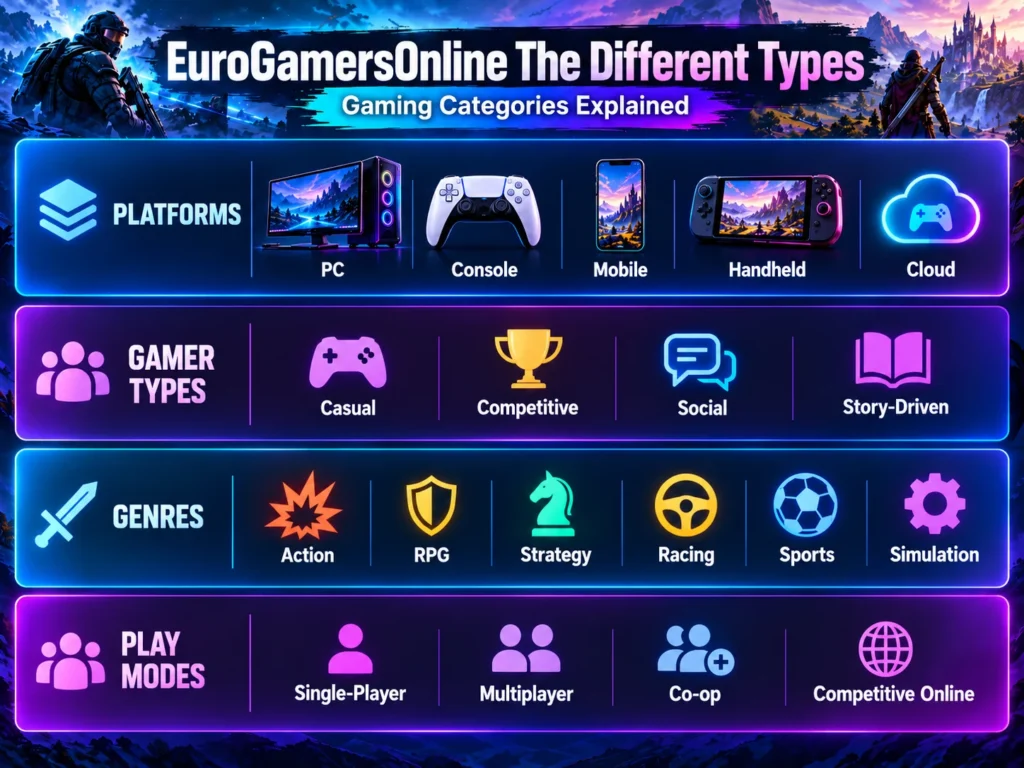
A useful way to organize the topic is through five layers. Content categories describe what a gaming website covers. Platforms describe where or how a game runs. Gamer types describe how a person prefers to play. Genres describe the game itself, while play modes explain whether people play alone, cooperatively, or competitively.
These layers can overlap. A player might use a PC, prefer role-playing games, play co-op with friends, and still consider themselves a casual gamer.
Main EuroGamersOnline Gaming Categories
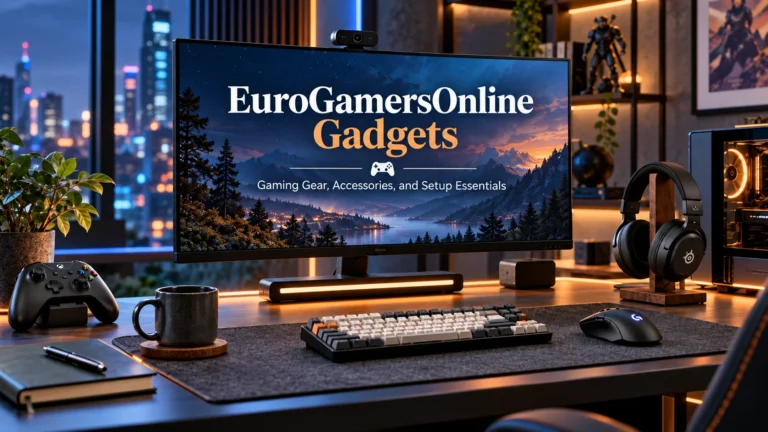
When discussing EuroGamersOnline The Different Types, the main gaming categories include broad areas such as PC gaming, console gaming, and gaming gadgets. These are best treated as content and hardware categories rather than a fixed classification of gamer personalities.
PC Gaming
PC gaming covers games played on desktop and laptop computers. It offers flexible hardware, multiple control options, adjustable settings, and access to a wide range of genres. Players may use a keyboard and mouse, a controller, or both. PC setups can also include peripherals such as monitors, headsets, keyboards, mice, and microphones.
Console Gaming
Console gaming centers on dedicated gaming systems, including the major PlayStation, Xbox, and Nintendo ecosystems. Compared with PCs, consoles generally offer a more standardized hardware experience. They support action games, sports titles, racing games, RPGs, shooters, family games, and online multiplayer experiences without requiring users to choose individual internal components.
Gaming Gadgets and Accessories
Gaming gadgets include equipment used alongside a gaming platform. Controllers, headsets, keyboards, mice, monitors, microphones, and charging accessories are common examples. These products support gameplay but are not genres or player types. A headset is gaming hardware; it does not determine whether someone is a casual, competitive, or story-focused player.
Different Types of Gaming Platforms
A gaming platform describes the device, system, or delivery environment used to play a game. Common categories include PC, console, mobile, handheld, and cloud gaming.
PC and Console Gaming
PCs offer greater hardware and settings flexibility, while consoles provide a more standardized environment. Both support a broad range of genres, multiplayer features, and different control methods. The main differences usually involve setup, upgradeability, operating ecosystems, performance options, and the way games are purchased and played.
Mobile and Handheld Gaming
Mobile gaming takes place mainly on smartphones and tablets. Its biggest advantage is accessibility, with games ranging from short puzzles to strategy titles and online multiplayer experiences. Handheld gaming uses portable devices designed primarily for games. These systems combine controls, a display, and gaming hardware in one unit, making them useful for players who want a dedicated portable experience.
Cloud Gaming
Cloud gaming processes much of the game on remote servers and streams the experience to a supported device. It can reduce the need for powerful local hardware, but connection quality, latency, service availability, and device support matter. For that reason, cloud gaming is better understood as a delivery model or platform environment rather than simply another physical device.
Different Types of Gamers
Within EuroGamersOnline The Different Types, gamer types describe how people prefer to play rather than the device they use. These labels are flexible, and one person can fit several categories.
Casual Gamers
Casual gamers usually prefer accessible experiences or shorter sessions without making gaming a major time commitment. The label describes engagement style rather than skill level.
Competitive Gamers
Competitive gamers enjoy testing their abilities against other players. Ranked modes, leaderboards, tournaments, tactics, communication, and performance-based progression may be especially appealing.
Social Gamers
Social gamers value interaction with friends or communities. Cooperative games, multiplayer sessions, voice chat, and shared objectives can be as important as winning.
Story-Driven Gamers
Story-focused players are drawn to narrative, characters, exploration, world-building, and emotional engagement. Adventure games and RPGs commonly appeal to this preference.
Dedicated or Hardcore Gamers
“Hardcore gamer” is an informal term rather than a strict technical category. It is often used for players who devote more time to games, study mechanics deeply, follow releases closely, or place greater emphasis on progression and performance.
Types of Video Games and Gaming Genres
A game genre describes the mechanics, structure, or style of the game itself. The same genre can appear across PC, console, mobile, handheld, and cloud-based services.
Action and Shooter Games
Action games emphasize movement, combat, reaction speed, and quick decisions. Shooter games are a major branch of this category and often focus on ranged combat from first-person or third-person perspectives.
Role-Playing and Adventure Games
Role-playing games, or RPGs, often feature character development, quests, progression, exploration, equipment, and story choices. Adventure games commonly emphasize narrative, exploration, puzzles, or discovery. Modern games often blend these elements with action or multiplayer systems.
Strategy and Simulation Games
Strategy games focus on planning, resource management, positioning, and decision-making. Simulation games model activities or systems such as driving, flying, farming, city building, or business management. Some simulations aim for realism, while others simplify their systems for accessibility.
Sports, Racing, Puzzle, and Casual Games
Sports games recreate competitive activities, while racing games focus on vehicles, tracks, speed, and handling. Puzzle games emphasize logic, timing, patterns, or problem-solving. Casual games are generally designed to be easy to start and suitable for shorter sessions. “Casual” can describe both a game design style and a player type, so context matters.
Single-Player vs Multiplayer Gaming
Play mode describes how players participate in a game. It is separate from both platform and genre.
| Type | Main Experience | Common Appeal |
| Single-player | One player experiences the game independently | Story, exploration, progression |
| Multiplayer | Multiple players share the experience | Competition and social interaction |
| Co-op | Players work together toward shared goals | Teamwork and cooperation |
| Competitive online | Players compete directly | Ranking and skill development |
Multiplayer is not necessarily a genre. A multiplayer game can be a shooter, RPG, racing title, sports game, or strategy game. It is more accurate to describe multiplayer as a way a game is played.
EuroGamersOnline Gaming Types: Practical Examples
The phrase EuroGamersOnline The Different Types becomes easier to understand through practical examples. PC gaming content can cover computer games, controls, performance, peripherals, and the wider PC ecosystem. Console gaming content focuses on dedicated systems, games, controllers, and related hardware.
Gaming gadgets include accessories such as headsets, keyboards, mice, and controllers. These belong to the hardware layer rather than a genre or player category. Multiplayer gaming describes how several players participate in the same experience, while genre-based gaming groups games according to mechanics or style, such as strategy, racing, action, simulation, or role-playing.
Platform, Gamer Type, Genre, and Play Mode: What’s the Difference?
The easiest way to avoid confusion is to identify what each term describes.
| Category | What It Describes | Example |
|---|---|---|
| Gaming platform | Where or how a game runs | PC, console, mobile |
| Gamer type | How a player prefers to engage | Casual, competitive |
| Game genre | The game’s mechanics or style | RPG, strategy, racing |
| Play mode | How players participate | Single-player, multiplayer, co-op |
| Gaming hardware | Equipment used for gaming | Controller, headset, keyboard |
Someone could play an RPG on a PC, prefer cooperative multiplayer, use a controller, and still describe themselves as a casual gamer. These labels do not conflict because each describes a different part of the experience. Someone could play an RPG on a PC, prefer cooperative multiplayer, use a controller, and still describe themselves as a casual gamer. These labels do not conflict because each describes a different part of the experience.
How to Choose the Right Type of Gaming
Start with the device you already own or prefer. A capable computer may make PC gaming a natural option, while a console may suit someone who wants dedicated hardware and a simpler setup.
Portability also matters. Mobile and handheld gaming work well for people who want to play away from a fixed setup. Cloud gaming can extend access across supported devices, but it depends more heavily on internet quality.
Your preferred experience should also guide the choice. Competitive players may prioritize multiplayer performance, while story-focused players may prefer single-player campaigns. Social players may value co-op features and communication tools.
Controls, hardware flexibility, favorite genres, internet requirements, and willingness to upgrade equipment can further shape the decision. There is no single best gaming type because the right combination depends on the experience a player wants.
Why Gaming Types Often Get Confused
Gaming terminology overlaps because one game or player can fit several descriptions at once. A PC game may also be a multiplayer shooter and a competitive title, while the same person might enjoy both social and story-driven games.
Hardware adds another layer. Controllers, headsets, keyboards, and monitors support gaming, but they are not genres or player classifications. A useful rule is to ask what the term describes: the content, platform, player, game, play mode, or equipment.
Frequently Asked Questions
What do the different types on EuroGamersOnline mean?
EuroGamersOnline The Different Types generally refers to gaming categories connected with EuroGamersOnline and the wider gaming ecosystem, including content areas, platforms, gamer styles, genres, and play modes.
What gaming categories does EuroGamersOnline cover?
EuroGamersOnline The Different Types includes broad gaming categories such as PC gaming, console gaming, gaming gadgets, and related gaming discussions.
What are the main types of gaming platforms?
Common types include PC, console, mobile, handheld, and cloud gaming. They differ in hardware, portability, controls, ecosystems, and delivery methods.
What are the different types of gamers?
Common descriptive types include casual, competitive, social, story-focused, and dedicated or hardcore gamers. These are flexible labels rather than strict universal classifications.
What is the difference between a gaming platform and a genre?
A platform describes where or how a game runs, such as PC or console. A genre describes what kind of game it is, such as an RPG, racing game, strategy title, or shooter.
Is EuroGamersOnline the different types on EuroGamersOnline an official classification?
There is no clear basis for treating the phrase as a formal gaming taxonomy. It is more useful as a broad way of discussing EuroGamersOnline content alongside platforms, player styles, genres, play modes, and hardware.
Final Thoughts
EuroGamersOnline, the different types become clearer when platforms, gamer styles, genres, play modes, and hardware are treated as separate concepts. Understanding those differences gives readers a more accurate view of both EuroGamersOnline content and the wider gaming landscape.