Website for GamificationSummit Ticket Sales: Setup & Conversion Guide
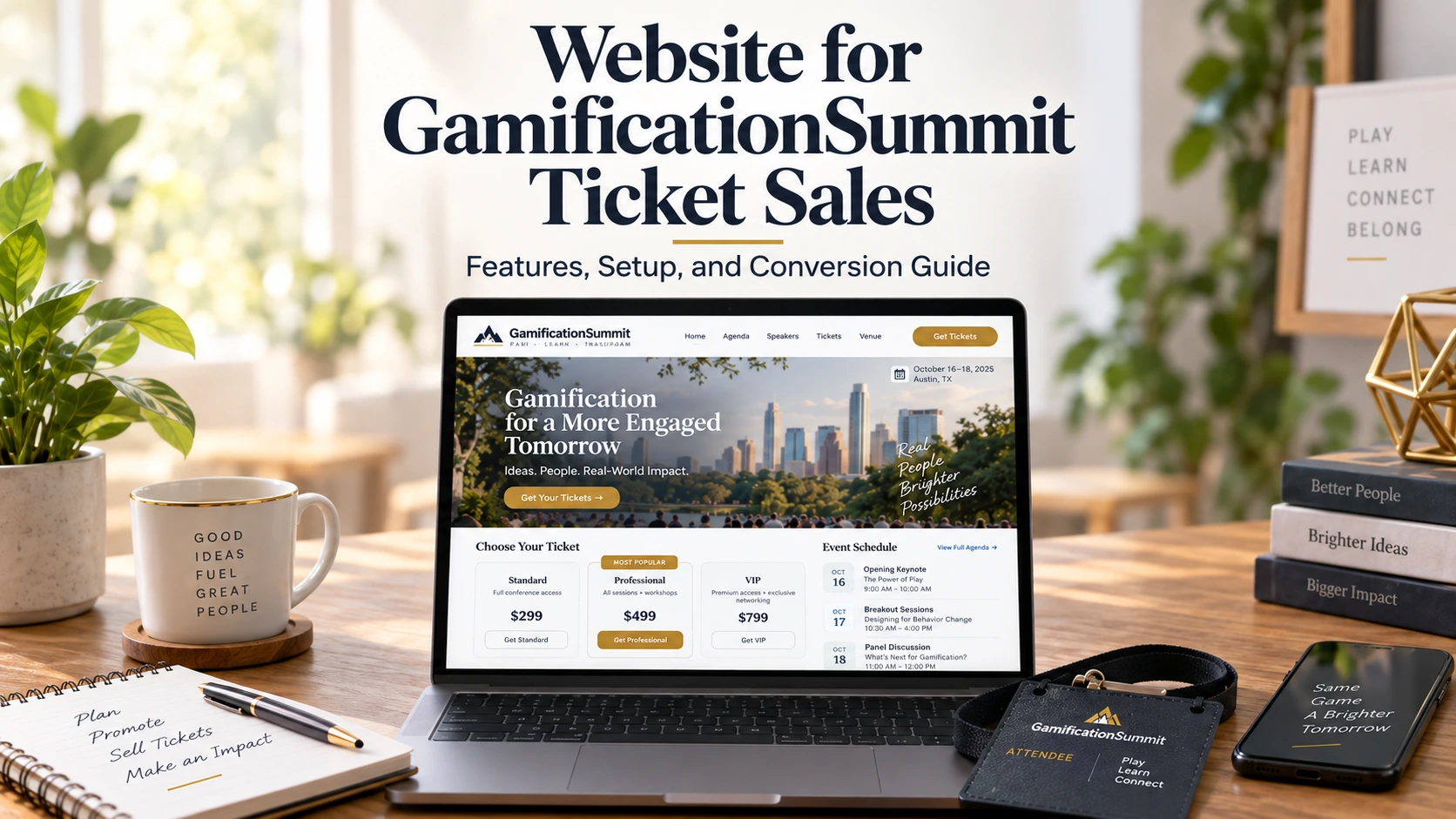
A website for GamificationSummit ticket sales should make it easy for visitors to understand the event, compare ticket options, register, pay securely, and receive confirmation without unnecessary steps. The strongest ticketing pages combine clear event information with mobile-friendly checkout, visible pricing, trust signals, and simple calls to action. Gamification elements such as early-bird rewards, referral incentives, progress indicators, and limited offers can support engagement when they improve the buying experience rather than distract from it.
A GamificationSummit ticket sales website should clearly show the event value, dates, ticket tiers, pricing, refund terms, and a purchase button before guiding buyers through a short registration and secure checkout process. Gamification can support conversions through rewards, referrals, progress indicators, and time-sensitive offers, but the core buying process should always remain simple and trustworthy.
What Is a Website for GamificationSummit Ticket Sales?
A website for GamificationSummit ticket sales is an event-focused page or platform used to present ticket options and convert interested visitors into registered attendees. Its job goes beyond displaying a payment button. Visitors need enough information to decide whether the event is relevant to them, which ticket fits their needs, what the price includes, and what happens after payment.
Current GamificationSummit-related pages emphasize value messaging, ticket options, checkout flow, social proof, and reduced purchase friction as important parts of a ticketing website. A useful page therefore combines event marketing with registration and transaction functionality.
What Should a GamificationSummit Ticket Website Include?
A well-designed Website for GamificationSummit Ticket Sales should answer the main buying questions before asking visitors for payment. Clear event details, transparent pricing, visible calls to action, secure payment options, and an easy checkout process can help visitors understand what they are purchasing and complete registration with fewer obstacles.
Clear Event Information
Visitors should immediately see:
- event name
- date and time
- location or virtual format
- main theme
- target audience
- key sessions or experiences
- ticket availability
The event description should explain what attendees receive rather than relying on vague phrases such as “an unforgettable experience.”
Ticket Pricing and Tiers
If several ticket types are available, make the differences easy to compare. Each tier should clearly state its price, access level, restrictions, and included benefits. Avoid hiding essential information until checkout. Unexpected fees or limitations introduced late in the process can reduce trust and increase abandoned purchases.
Strong Call-to-Action Buttons
Buttons such as Buy Tickets, Register Now, or Choose Your Pass should be easy to find. A visitor should not need to search through multiple pages before discovering where registration begins. The CTA should also remain consistent. Switching between vague terms such as “Explore,” “Get Started,” “Continue,” and “Join the Journey” can make a simple ticket purchase unnecessarily confusing.
Mobile-Friendly Checkout
Many buyers will reach an event page from social media, email, search, or messaging apps on a phone. The checkout should therefore work comfortably on smaller screens. Forms need readable text, large input fields, simple ticket selection, and payment methods that do not require excessive typing.
Secure Payment Options
The ticket page should clearly identify how payments are processed. Useful trust indicators can include HTTPS, a recognizable payment processor, clear merchant information, and a professional confirmation process. Security badges alone should not be treated as proof that a ticket seller is legitimate. Buyers should still verify the organizer and event.
Refund and Privacy Information
Customers should be able to locate refund, cancellation, transfer, and privacy policies before paying. This is especially important for international attendees who may face schedule changes, travel restrictions, or different consumer-protection rules.
How the Ticket Sales Process Should Work
A good checkout flow removes unnecessary decisions.
Choose a Ticket
The buyer starts by selecting the appropriate ticket tier. Show the price and major benefits directly beside each option rather than forcing visitors to open several separate pages.
Enter Registration Details
Collect only the information genuinely required for registration.
Typical fields may include:
- full name
- company
- job title
- ticket quantity
- accessibility requirements
Long forms can be completed later if additional attendee information is needed.
Complete Payment
The payment stage should show the complete amount before the buyer confirms the transaction. If taxes, processing fees, or optional extras apply, make them visible before the final payment action.
Receive Confirmation
After payment, buyers should receive an immediate confirmation page and email. The message should explain what happens next, including ticket access, event login details, schedule updates, or instructions for contacting support.
Ticket Types and Pricing Structure
There is no single ticket structure that works for every summit.
A typical event may use something like this:
| Ticket Type | Typical Purpose | Possible Benefits |
|---|---|---|
| Early Bird | Reward early commitment | Lower initial price |
| Standard | Core event access | Main sessions and general activities |
| Premium/VIP | Higher-access experience | Extra workshops or networking |
| Group | Teams and companies | Multiple registrations under one purchase |
| Virtual | Remote attendance | Livestream or digital-session access |
These are general ticketing models, not confirmed current GamificationSummit packages. Actual ticket names, prices, and inclusions should always come from the current event sales page.
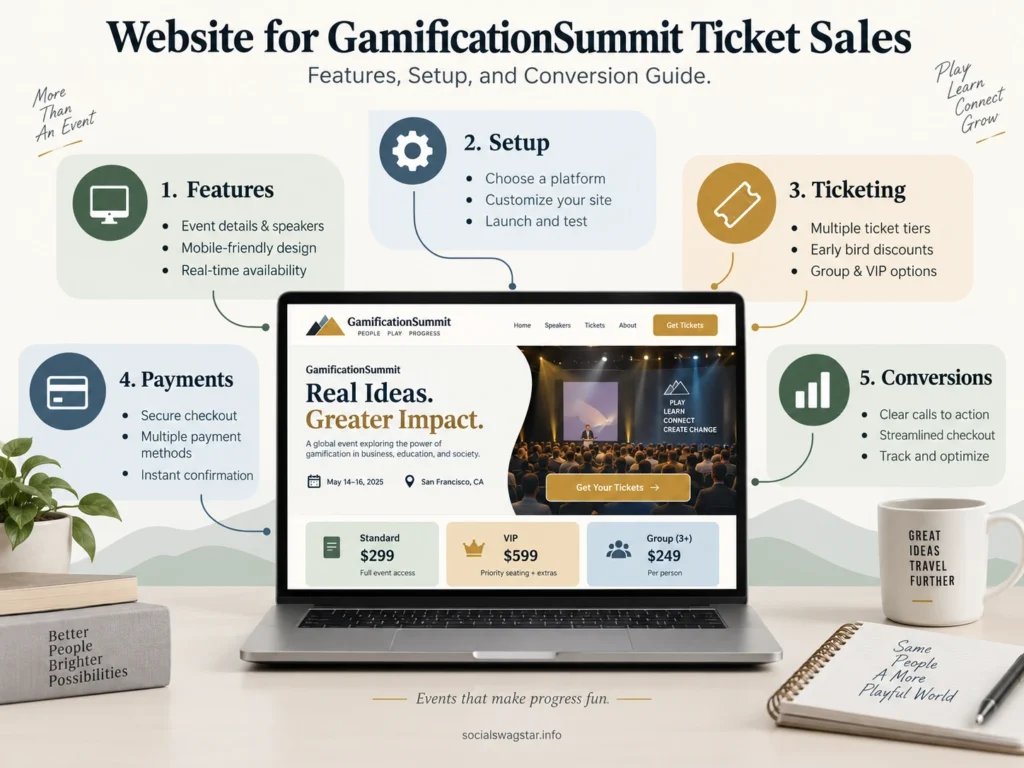
How Gamification Can Improve Ticket Sales
Gamification can make event marketing more interactive, but it should support the purchase rather than make checkout feel like a game users must complete.
Early-Bird Rewards
Early-bird pricing gives visitors a reason to make a decision before a defined deadline. The offer should display both the benefit and expiry clearly. Artificial countdowns that repeatedly reset can damage trust.
Referral Incentives
A referral program can reward existing attendees for introducing other participants. Possible incentives include discounted upgrades, merchandise, event credits, or additional access, depending on the event. Referral terms should explain exactly what action earns the reward.
Progress Bars
Progress indicators work particularly well during multi-step registration. Showing Ticket → Details → Payment → Confirmation tells buyers where they are and how much remains. This is functional gamification because it improves orientation without distracting from checkout.
Countdown Timers
Countdowns can communicate a real deadline for an early-bird rate, ticket release, or registration closure. They are most effective when tied to genuine timing rather than manufactured scarcity.
Points, Badges and Leaderboards
Points or badges can support pre-event community engagement. For example, attendees might receive recognition for completing profiles, referring colleagues, participating in challenges, or joining educational activities. A leaderboard should only be used when competition genuinely fits the event audience.
How to Build a High-Converting Ticket Sales Page
Start with a clear event value proposition near the top of the page. Within the first screen, visitors should ideally understand what the event is, when it happens, who it is designed for, and where they can buy a ticket.
Below that, provide enough evidence to support the decision:
- agenda highlights
- speaker information
- ticket comparison
- attendee benefits
- organizer information
- FAQs
- refund terms
- testimonials where genuine
- clear registration CTA
Current GamificationSummit ticketing guidance similarly emphasizes a prominent hero section, ticket value, pricing options, urgency, trust signals, and a streamlined checkout path.
Mobile Optimization for GamificationSummit Tickets
Mobile optimization is not only about making the page fit a smaller screen. The complete buying journey should work smoothly with one hand and a touchscreen. Keep forms short, avoid tiny dropdowns, make CTA buttons easy to tap, and do not cover essential information with pop-ups. Test the entire process on multiple screen sizes—from landing page through payment confirmation, not just the homepage.
Secure Checkout and Payment Processing
Payment security affects both conversion and buyer confidence. A professional ticket website should use encrypted connections, reputable payment processing, clear billing information, and a confirmation process that helps customers verify their order.
Buyers should be cautious when a ticket seller requests unusual payment methods such as direct cryptocurrency transfers, gift cards, or peer-to-peer payments without normal buyer protections. The event itself should also be independently verifiable before payment details are entered.
Trust Signals That Help Ticket Buyers
Trust signals answer the buyer’s unspoken question: Is this event and checkout genuine?
Useful signals include:
- organizer name and contact details
- clear event date and venue/platform
- speaker profiles
- transparent pricing
- terms and conditions
- refund policy
- privacy policy
- secure checkout
- confirmation emails
- consistent branding
- independent event references where available
Do not rely entirely on logos or testimonials that cannot be verified.
Ticket Sales Analytics and Conversion Tracking
Analytics can show where buyers enter and leave the sales funnel.
Useful metrics include:
- ticket-page visits
- CTA click rate
- checkout starts
- completed purchases
- checkout abandonment
- mobile vs desktop conversion
- traffic source
- ticket tier selected
- promotional-code use
- referral conversions
The goal is not simply to generate more clicks. If many visitors reach checkout but do not finish, the problem may involve pricing clarity, form length, unexpected fees, technical errors, or insufficient trust.
Common Ticket Website Mistakes
A ticket page can lose buyers even when the event itself is attractive.
Common problems include:
- unclear event value
- hidden prices
- too many registration fields
- confusing ticket tiers
- weak mobile experience
- surprise checkout fees
- missing refund terms
- broken payment forms
- fake urgency
- excessive pop-ups
- unsupported social proof
- unclear organizer identity
Adding more gamification does not fix a fundamentally confusing checkout. First make the transaction simple. Then add interactive mechanics where they improve engagement.
Websites for GamificationSummit Ticket 2021: What Searchers Should Know
Some people still search phrases such as tickets 2021 websites for GamificationSummit, ticket 2021 websites for GamificationSummit, websites for GamificationSummit ticket 2021, and tickets 2021 sites for GamificationSummit. These searches should be treated as historical intent.
Current GamificationSummit pages discussing the old ticket system describe the 2021 material as archival rather than a live route for purchasing current tickets. One recent page specifically notes that people researching where tickets were sold in 2021 are reconstructing a past sales process, not finding an active checkout.
Therefore, an old website for ticket sales for GamificationSummit or sites for ticket sales for GamificationSummit results should not automatically be trusted for a current event. The publication date matters.
How to Identify the Current Official Ticket Sales Website
Before purchasing a current ticket, verify more than the domain name. A legitimate Website for GamificationSummit Ticket Sales should connect clearly to the current organizer, event details, ticket terms, and checkout process rather than relying only on a familiar-looking name.
Use this checklist:
- Confirm that the event date is upcoming.
- Identify the organizer behind the summit.
- Check whether the organizer links directly to the ticket page.
- Confirm the venue or virtual-event platform where possible.
- Check the exact ticket inclusions and price.
- Review refund and transfer policies.
- Confirm the merchant shown at checkout.
- Look for working contact information.
- Avoid old 2021 sales pages presented as current.
- Save the order confirmation and receipt after purchase.
Search results currently include several GamificationSummit-related pages and conflicting historical descriptions of earlier ticket sales, so buyers should verify the current organizer and checkout rather than assuming every similarly named page is an official seller.
Frequently Asked Questions
What is a website for GamificationSummit ticket sales?
It is a ticketing or registration website designed to explain the summit, show available ticket options, collect attendee information, process payments, and issue confirmations.
What should a GamificationSummit ticket page include?
A strong page should include the event date, purpose, ticket tiers, prices, benefits, registration CTA, secure checkout, organizer information, refund terms, privacy details, and confirmation process.
Are GamificationSummit 2021 ticket websites still valid for buying tickets?
Old 2021 ticket pages should be treated as historical resources rather than assumed current checkout pages. Always verify the latest event year and organizer before paying.
Can gamification increase event ticket sales?
Gamification can support engagement through early-bird rewards, referrals, progress indicators, challenges, or recognition. However, it does not guarantee higher sales, and it should never make checkout harder.
How can I tell whether a ticket website is legitimate?
Verify the event independently, check the organizer and event date, inspect contact and refund information, confirm the payment merchant, and avoid pages requesting unusual or irreversible payment methods.
Should ticket buyers use mobile checkout?
A properly designed event website should support mobile purchasing. Buyers should still confirm that the page is genuine and secure before entering personal or payment information.
Final Thoughts
A successful website for GamificationSummit ticket sales should prioritize clarity, trust, and a short purchase path before adding gamification features. Ticket tiers, event information, payment terms, and registration steps need to be easy to understand on both desktop and mobile.
Older websites for GamificationSummit ticket 2021 may still appear in search, but historical pages should not be confused with current sales channels. Always verify the active event and authorized checkout before purchasing.